Texas lawns face constant weed pressure, from crabgrass and clover to stubborn nutsedge. But using the wrong weed killer can cause more damage than the weeds themselves. That’s why it’s important to choose the right treatment for your lawn type and apply it correctly. In this article, we’ll cover expert tips to help you kill weeds safely while keeping your grass healthy, green, and strong throughout the season.
In Texas areas like Liberty Hill, Leander, Georgetown, Cedar Park, and Austin, weeds grow aggressively due to heat and long seasons. But the wrong weed killer or incorrect application can easily harm your turfgrass too. At Yardful Lawn, we specialize in safe weed control treatments designed specifically for Texas lawns.
Identify the Weed Before You Treat It
The first step is knowing what you’re dealing with. Some weeds are broadleaf weeds (like dandelions and clover), while others are grassy weeds (like crabgrass and goosegrass). Using the wrong product can kill your grass along with the weed.
Broadleaf weeds are usually easier to control without damaging turf because selective herbicides can target them without harming most Texas grasses.
Use a Selective Herbicide (Not a Total Weed Killer)
One of the biggest mistakes homeowners make is using non-selective herbicides like total vegetation killers. These products don’t know the difference between weeds and lawn grass.
Instead, choose a selective herbicide made for lawns. These products are designed to kill weeds while protecting common Texas turf types like Bermuda grass, St. Augustine, and Zoysia. Always read the label to make sure it’s safe for your grass type.
Apply Weed Killer at the Right Temperature
In Texas, heat plays a major role. Spraying weed killer when temperatures are too high can stress the lawn and cause yellowing or burning.
For best results, apply weed control when temperatures are between 60°F and 85°F, ideally in the early morning or late afternoon. Avoid spraying during extreme summer heat, especially in the middle of the day.
Don’t Mow Right Before or After Treatment
Many weed killers need time to absorb into the weed’s leaves. If you mow too soon, you remove the surface area the product needs to work.
A good rule is:
- Don’t mow 1–2 days before treatment
- Don’t mow 2–3 days after treatment
This gives the herbicide time to fully kill the weed down to the root.
Spot Treat Instead of Blanket Spraying
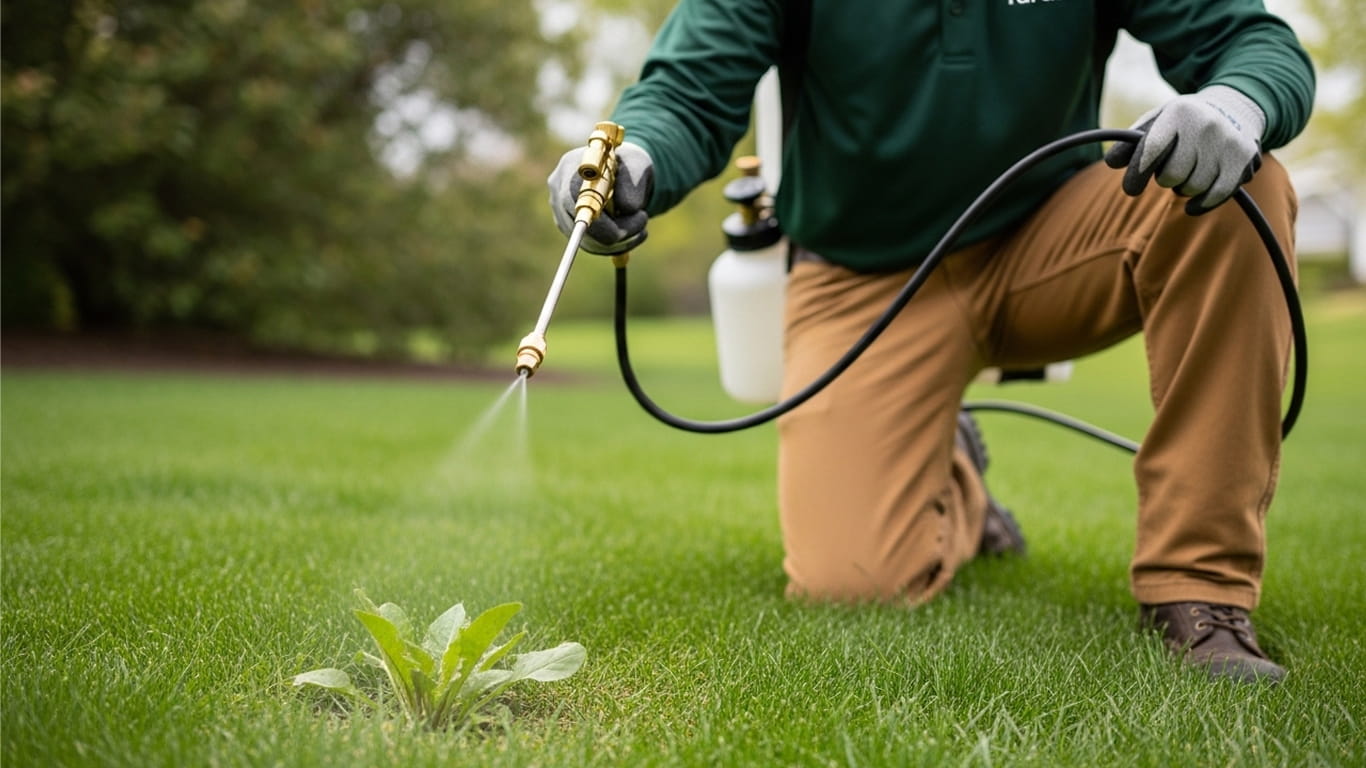
If weeds are only in certain areas, spot treatment is the safest option. Blanket spraying the entire lawn increases the risk of over-application and turf damage.
Spot treating also saves money and reduces chemical exposure in your yard.
Strengthen Your Lawn to Prevent Future Weeds
The healthiest lawns naturally fight weeds. A thick lawn blocks sunlight from reaching weed seeds, stopping them from growing.
To build stronger turf in Texas:
- fertilize properly
- aerate compacted soil
- water deeply but not too often
- overseed thin areas when needed
What Weed Killer Won’t Kill Grass?
A selective weed killer designed for lawns can kill weeds without harming grass. The key is choosing the right product for your grass type and applying it during the correct weather conditions.
Professional Weed Control in Liberty Hill & Nearby Texas Areas
If you want guaranteed results without risking damage to your lawn, Yardful Lawn offers professional weed control services in Liberty Hill, Leander, Georgetown, Cedar Park, Austin, and surrounding Texas communities.
Contact Yardful Lawn today to schedule a safe and effective weed treatment plan.

