Texas lawns deal with a lot throughout the year. Hot summers, intense sunlight, changing rainfall, and heavy foot traffic can leave grass stressed by the time fall arrives. As temperatures begin to cool, your lawn needs a different type of care to stay in good condition through winter and be ready for the next growing season.
Preparing your lawn for winter does not mean doing everything at once. A few seasonal adjustments to mowing, watering, weed control, cleanup, and general maintenance can help keep your yard looking neat and support healthier turf.
Here are some practical ways to prepare your Texas lawn for the colder months.
1. Adjust Your Mowing Routine
As temperatures cool, warm-season grasses such as Bermuda and St. Augustine generally grow more slowly. This means you may not need to mow as frequently as you did during the summer.
Continue mowing while your grass is actively growing, but avoid cutting it excessively short. Removing too much of the grass blade at once can put unnecessary stress on the lawn.
Keep your mower blades sharp and adjust your mowing schedule according to the actual growth of your lawn. If grass growth slows significantly, gradually reduce mowing frequency rather than continuing with the same summer schedule.
A clean, properly maintained lawn also makes fall cleanup easier and helps prevent excessive leaf and debris buildup.
2. Adjust Your Watering Schedule
One of the biggest mistakes homeowners can make when temperatures drop is continuing a summer watering routine without considering changing weather conditions.
Your lawn generally needs less water during cooler weather than it does during a hot Texas summer. Before watering, check the condition of the soil and grass and consider recent rainfall.
Overwatering can create problems, including unnecessarily wet soil and conditions that may contribute to lawn diseases. On the other hand, completely neglecting your lawn during dry periods can also cause stress.
Check your irrigation system for leaking pipes, damaged sprinkler heads, clogged nozzles, and areas that receive too much or too little water. Adjusting your irrigation schedule for the season can help you use water more efficiently.
3. Watch for Fall and Winter Weeds
Cooler temperatures do not mean your lawn is completely free from weeds. Some weeds become more noticeable during fall and winter, particularly when turf growth slows down.
Walk your property regularly and look for weeds appearing throughout the lawn, garden beds, cracks, and other landscape areas.
The right weed-control approach depends on the type of weed, turfgrass, location, and timing. Instead of applying products randomly, identify the problem first and choose an appropriate treatment.
Professional weed control can also help homeowners manage seasonal weeds while protecting desirable lawn and landscape plants.
4. Remove Leaves and Yard Debris
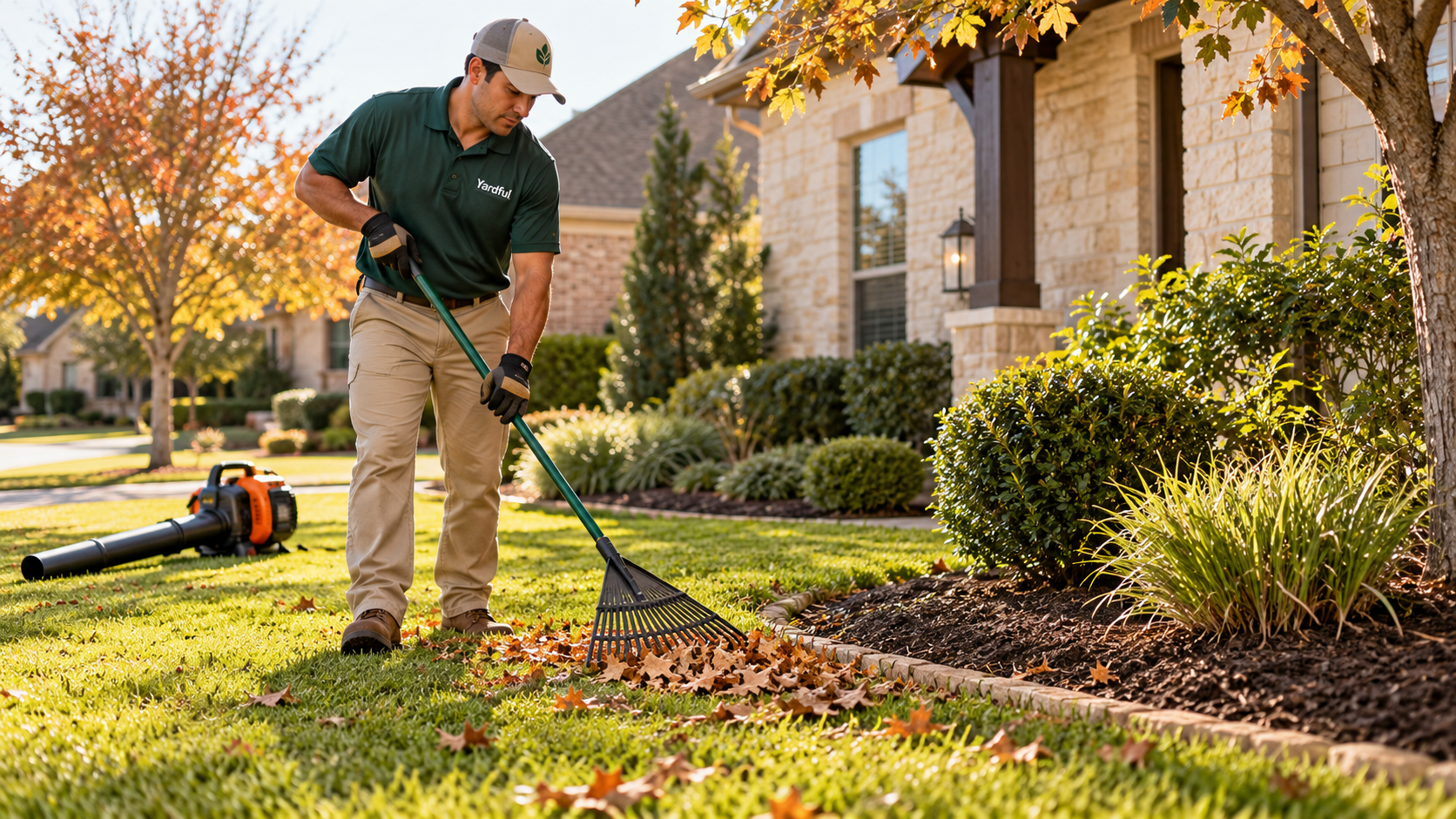
Fall leaves, branches, grass clippings, and other debris can accumulate quickly.
Leaving a thick layer of leaves on the lawn for an extended period can block sunlight and airflow from reaching the grass. Wet leaves can also become heavy and create additional problems for the turf underneath.
Regularly remove leaves and other debris from lawn areas, walkways, garden beds, and around outdoor features.
If your property has several mature trees, scheduling professional seasonal yard cleanup can make this process much easier.
5. Check Your Lawn After Summer Stress
Before winter arrives, take some time to inspect your lawn.
Look for:
- Thin or bare areas
- Discolored grass
- Compacted soil
- Weeds
- Damaged turf
- Standing water
- Areas with poor irrigation coverage
- Excessive thatch or debris
Fall is a useful time to identify problems rather than simply waiting until spring. Some lawns may benefit from services such as aeration, lawn renovation, or other maintenance depending on grass type and site conditions.
If you're unsure what your lawn needs, a professional assessment can help you determine which services are appropriate.
6. Pay Attention to Soil and Drainage
Healthy turf depends on more than mowing and watering. Soil condition and drainage also play an important role in lawn performance.
Walk around your property after irrigation or rainfall and look for areas where water remains for too long. Persistent standing water may indicate drainage or grading problems.
Likewise, heavily used areas can become compacted over time. Compacted soil can make it more difficult for water, air, and nutrients to reach the root zone.
If your lawn has signs of compaction, professional core aeration may be worth considering when conditions are suitable for your grass type.
7. Don't Forget Your Landscape Areas
Winter preparation should not stop at the edge of your lawn.
Take a look at shrubs, hedges, garden beds, trees, mulch, and other landscape features. Remove fallen branches and unwanted debris, and inspect plants for signs of damage or stress.
Seasonal trimming should be based on the specific plants involved rather than using the same pruning approach for everything. Proper landscape maintenance can help keep your property looking organized throughout the cooler months.
8. Make a Plan for Spring
Winter preparation is also an opportunity to think ahead.
If your lawn has thin areas, damaged turf, drainage concerns, irrigation problems, or landscaping projects that need attention, make a list before the end of the year.
Planning ahead can make it easier to schedule services when spring lawn growth begins again. It also gives you time to determine whether you need lawn renovation, sod installation, aeration, planting, irrigation maintenance, or other improvements.
Give Your Texas Lawn the Seasonal Care It Needs
Preparing a Texas lawn for winter is mainly about adjusting your routine to changing conditions. Reduce unnecessary watering, adjust mowing as growth slows, monitor seasonal weeds, remove leaves and debris, inspect problem areas, and keep your irrigation and landscape areas maintained.
Every lawn is different, so the right winter preparation depends on your grass type, soil, irrigation, landscape design, and local weather conditions.
For homeowners in Liberty Hill, Leander, Georgetown, Round Rock, Cedar Park, and Pflugerville, Yardful Lawn Services provides lawn maintenance, mowing, weed control, seasonal cleanup, aeration, irrigation maintenance, and other lawn and landscape services to help keep outdoor spaces maintained throughout the year.
A little preparation now can make it easier to bring your lawn back to its best when the next growing season arrives.


