Keeping your lawn green and healthy does not always mean watering it every day. In fact, frequent watering can sometimes create shallow roots and make grass more dependent on regular irrigation. With the right lawn care practices, you can maintain a healthy lawn while using significantly less water.
This is especially important for homeowners in Texas, where hot summers, dry conditions, and water restrictions can make lawn maintenance challenging. The goal is not simply to use less water, but to help your grass make better use of the water it receives.
Here are some practical ways to maintain a healthy lawn with less water.
1. Water Deeply Instead of Frequently
One of the simplest ways to reduce water usage is to change how often you water your lawn.
Instead of giving your grass a small amount of water every day, water deeply and less frequently. Deep watering encourages grass roots to grow farther into the soil, where moisture stays available for longer periods.
Early morning is generally the best time to water because temperatures are cooler and wind is usually lower. Watering during the middle of the day can lead to more evaporation, while late-evening watering can leave grass wet for extended periods.
Pay attention to your lawn rather than following a rigid schedule. If the grass begins to look slightly dull or footprints remain visible after walking across it, it may be time to water.
2. Mow at the Right Height
Your mowing habits can have a surprising effect on how much water your lawn needs.
Cutting grass too short can stress the plants and expose the soil to more sunlight. This increases evaporation and can cause the lawn to dry out faster.
Keep your grass at an appropriate height for its type and avoid removing too much of the grass blade at one time. A slightly taller lawn generally provides more shade to the soil and helps retain moisture.
Sharp mower blades also make a difference. A clean cut puts less stress on grass compared with a blade that tears or damages the grass.
3. Improve Your Soil
Healthy soil is essential for a water-efficient lawn.
Compacted or poor-quality soil may prevent water from moving properly into the root zone. Instead of soaking into the ground, water can run across the surface or collect in certain areas.
Adding organic matter when appropriate can improve soil structure and its ability to retain moisture. Regular soil testing can also help you understand whether your lawn needs specific nutrients or soil amendments.
Healthy soil supports stronger roots, and stronger roots help grass tolerate periods of limited rainfall.
4. Aerate Compacted Lawn Areas
Foot traffic, heavy equipment, and natural soil settling can compact your lawn over time. When soil becomes compacted, air, water, and nutrients have difficulty reaching the grass roots.
Core aeration creates small openings in the soil that allow water and nutrients to move deeper into the root zone. This can help your lawn make better use of the water you apply.
If your lawn feels hard or water tends to run off instead of soaking in, aeration may be worth considering.
For homeowners looking to improve soil and root health, professional core aeration services can be a useful part of a water-efficient lawn care routine.
5. Fix Irrigation Problems
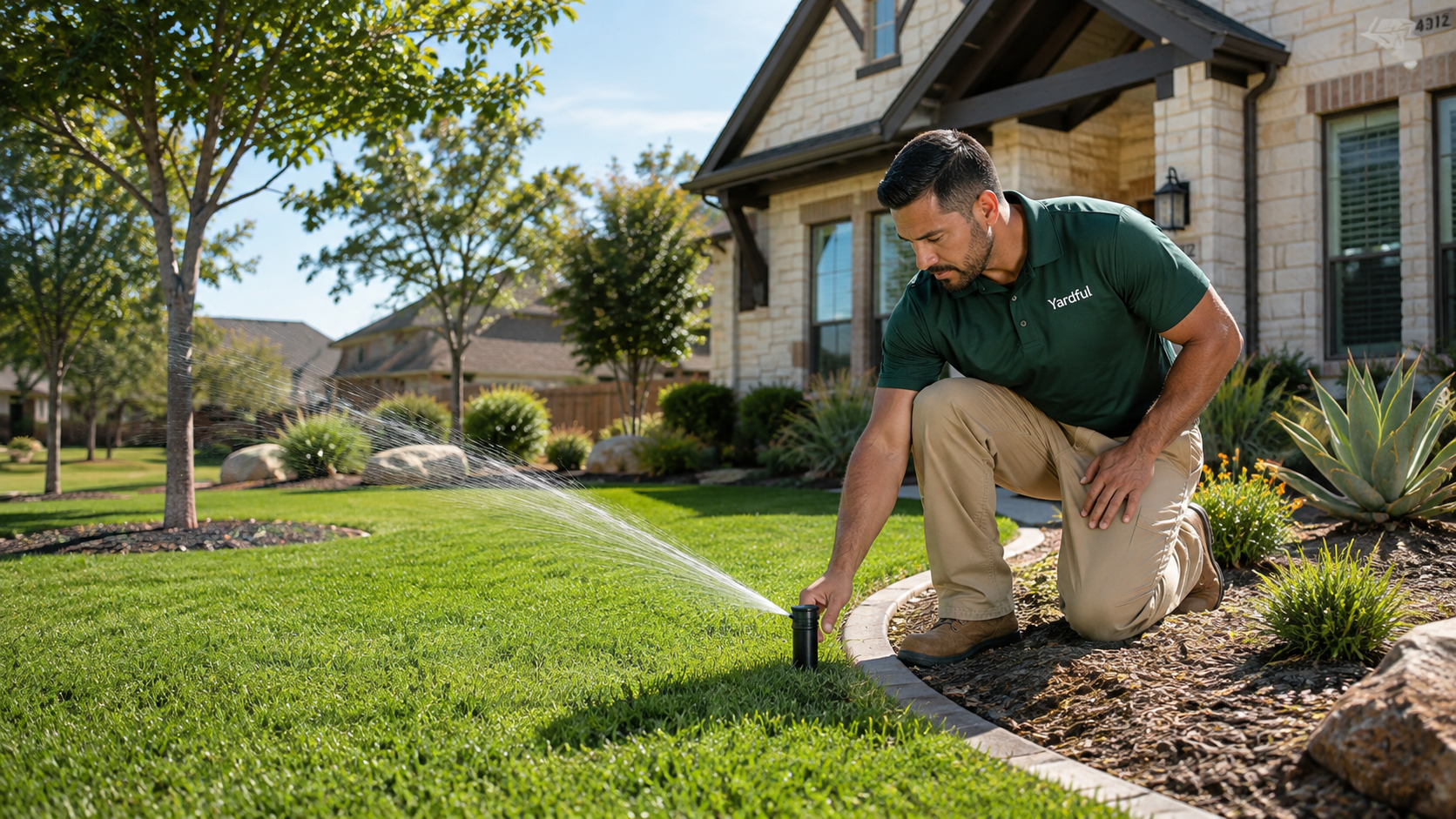
A lawn can waste a surprising amount of water because of a damaged or poorly adjusted irrigation system.
Check your sprinklers regularly for broken heads, leaks, clogged nozzles, or areas that are receiving too much or too little water. Make sure sprinklers are watering the lawn rather than sidewalks, driveways, patios, or other areas.
You can also consider using a smart irrigation controller that adjusts watering based on weather conditions and soil moisture.
Small irrigation improvements can reduce unnecessary water use while helping your lawn receive more consistent coverage.
6. Use Mulch Around Landscape Beds
Although mulch is not applied directly to your turf, it can help reduce water consumption throughout your yard.
A layer of mulch around trees, shrubs, and garden beds helps slow evaporation and keeps soil cooler during hot weather. It can also help reduce competition from weeds that consume water and nutrients.
Keeping landscape beds properly mulched can therefore make your entire yard more efficient with water.
7. Control Weeds
Weeds compete with grass for water, sunlight, nutrients, and space. A lawn with a significant weed problem may require more resources to remain healthy.
Regular weed control can help reduce this competition and give desirable grass better access to available moisture.
Preventive lawn care is usually more effective than waiting until weeds have taken over. Proper mowing, fertilization, watering, and soil management can all contribute to a stronger lawn that is better able to compete with weeds.
8. Choose Grass and Plants Carefully
If you are installing a new lawn or replacing damaged areas, consider grass varieties and landscape plants that are appropriate for your local climate.
Texas lawns need to withstand heat and periods of limited rainfall. Choosing plants that are well suited to local growing conditions can reduce long-term maintenance and watering requirements.
A professional lawn care or landscaping company can help you determine which options make sense for your property.
9. Let Your Lawn Recover During Dry Periods
A healthy lawn does not always need to look perfectly green throughout every dry period.
During extreme heat or drought, some grass types naturally slow their growth or become dormant. Trying to maintain a bright green lawn at all times may require excessive watering.
Instead, focus on maintaining healthy soil, strong roots, proper mowing, and appropriate watering. Once favorable conditions return, many lawns can recover naturally.
Build a More Water-Efficient Lawn
Using less water does not mean giving up on a healthy, attractive lawn. Smart watering, proper mowing, soil improvement, aeration, irrigation maintenance, weed control, and appropriate plant selection can all help your lawn use available water more efficiently.
The key is to focus on the overall health of your lawn rather than simply adding more water. A lawn with strong roots and healthy soil will generally handle heat and dry conditions much better than one that depends on frequent shallow watering.
For ongoing lawn maintenance, homeowners can explore Yardful Lawn Services for professional lawn care solutions designed to keep outdoor spaces looking healthy and well maintained.
Want a Healthier Lawn That Uses Less Water?
You don’t have to choose between a beautiful lawn and responsible water use. With proper mowing, watering, aeration, fertilization, and regular maintenance, your lawn can stay healthy while using water more efficiently.
Ready to improve your lawn? Contact Yardful Lawn Services today for professional lawn care and landscaping services in Central Texas.


