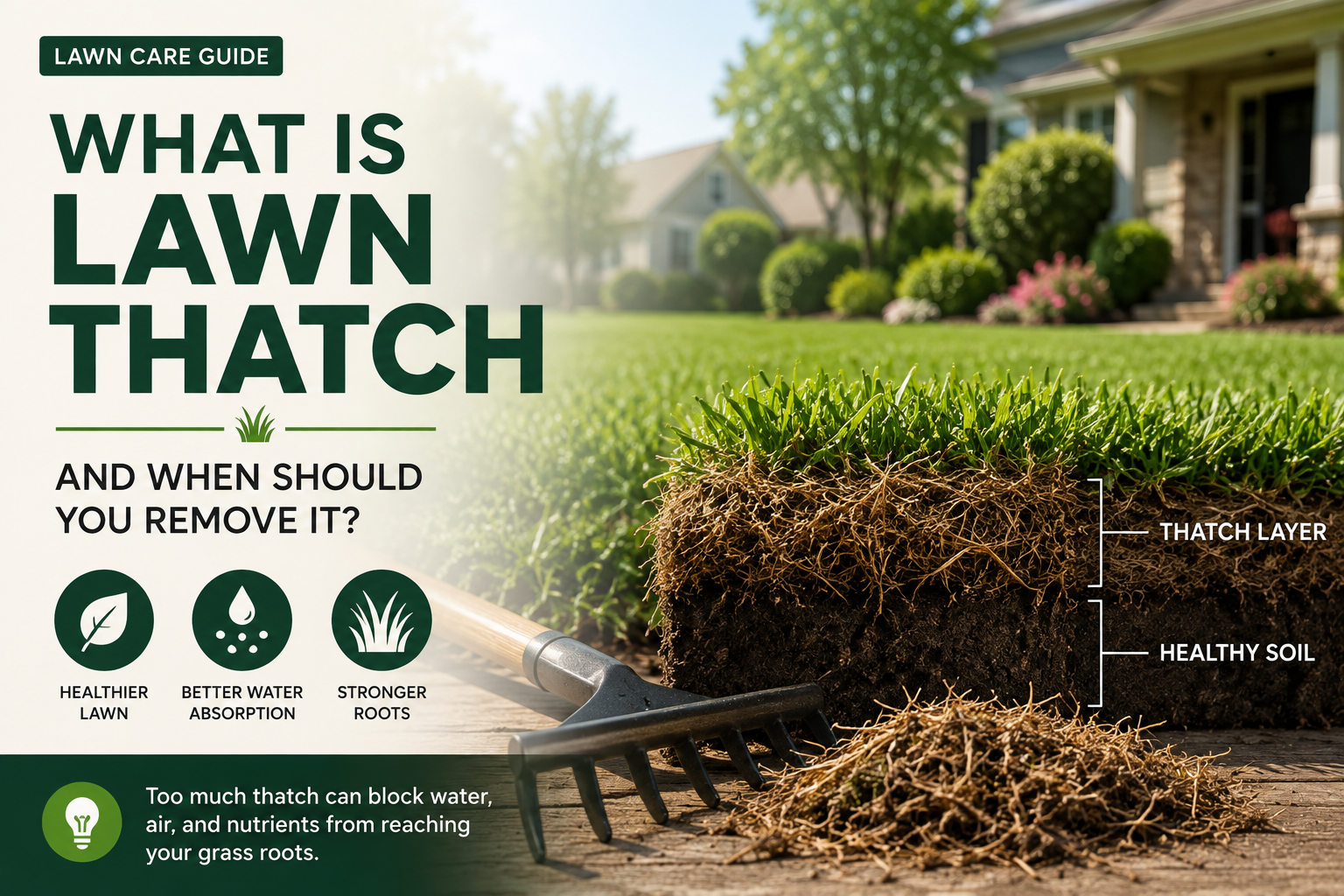
A healthy lawn needs more than regular mowing and watering. Sometimes, a layer of dead grass, roots, stems, and other organic material can build up between the soil and the green grass blades. This layer is called lawn thatch.
A small amount of thatch can actually benefit your lawn by protecting the soil and providing natural organic material. However, when the layer becomes too thick, it can prevent water, air, and nutrients from reaching the soil and grass roots properly.
For homeowners in Central Texas, knowing how to identify excessive thatch and when to remove it can make a big difference in maintaining a healthy, attractive lawn.
What Is Lawn Thatch?
Lawn thatch is a layer of partially decomposed organic material that develops between the soil surface and the green grass. It can include dead grass stems, roots, stolons, rhizomes, and other plant material.
A thin layer of thatch is normal and isn't necessarily a problem. It can help protect the soil from temperature changes and provide some cushioning for the grass.
The problem begins when thatch accumulates faster than it can naturally decompose. A thick thatch layer can create a barrier between your grass and the soil.
How Does Thatch Build Up?
Thatch develops when organic material is produced faster than microorganisms in the soil can break it down.
Several factors can contribute to excessive thatch, including certain grass varieties, compacted soil, over-fertilization, excessive watering, and poor soil conditions.
Healthy soil naturally breaks down dead plant material. But when this process cannot keep up with the amount of organic material being produced, thatch can gradually become thicker.
Signs Your Lawn Has Too Much Thatch
Not sure whether your lawn needs dethatching? Look for these common signs:
Your lawn feels spongy: If your grass feels unusually soft or springy when you walk across it, excessive thatch could be present.
Water doesn't soak into the soil: Water may remain on the surface or run off instead of reaching the grass roots.
Grass looks thin or weak: Your lawn may struggle to grow even when you are mowing and watering regularly.
The soil is difficult to reach: A thick organic layer may make it difficult to see or reach the soil beneath your grass.
Recurring lawn problems: Excessive thatch can create conditions that contribute to certain lawn diseases and pest issues.
If you notice several of these signs, it may be worth having your lawn professionally inspected.
When Should You Remove Lawn Thatch?
The right time to dethatch depends on your grass type and local growing conditions. Generally, dethatching is best performed when the grass is actively growing and has enough time to recover.
For lawns in Central Texas, timing is especially important because of the region's hot summers. Dethatching during extreme heat can place additional stress on your lawn.
Instead, homeowners should plan dethatching around periods when grass is actively growing and weather conditions are more suitable for recovery.
If you're unsure about the right timing, a professional lawn care company can evaluate your grass type and lawn condition and recommend an appropriate schedule.
What Is Dethatching?
Dethatching is the process of removing excessive organic material from the surface of your lawn. Professional lawn care providers use specialized equipment to loosen and remove the thick layer between the grass and soil.
After dethatching, your lawn may temporarily look rough or thinner than usual. This is normal. Removing excessive thatch allows water, air, and nutrients to reach the soil more effectively.
With proper follow-up care, the grass can recover and develop stronger, healthier growth.
Dethatching vs. Core Aeration
Dethatching and core aeration are two different lawn care services, although they can work well together.
Dethatching removes excessive organic material from above the soil.
Core aeration removes small plugs of compacted soil from the lawn. This helps improve the movement of air, water, and nutrients into the root zone.
If your lawn has both excessive thatch and compacted soil, a lawn care professional may recommend both services as part of a comprehensive lawn maintenance plan.
How Can You Prevent Excessive Thatch?
Regular lawn maintenance can help reduce the chances of excessive thatch buildup.
Avoid over-fertilizing your lawn and follow appropriate mowing practices. Water according to your lawn's needs rather than watering excessively. Address compacted soil and other lawn problems before they become more serious.
It's also worth noting that grass clippings don't automatically cause thatch. When you mow correctly and leave small clippings on the lawn, they can break down naturally and return nutrients to the soil.
Keep Your Texas Lawn Healthy
Thatch is a natural part of lawn growth, but excessive buildup can interfere with healthy grass development. If your lawn feels spongy, looks weak, or struggles to absorb water, excessive thatch could be one of the causes.
Yardful Lawn Services provides professional lawn care solutions for homeowners throughout Central Texas, including Cedar Park, Leander, Round Rock, Georgetown, Pflugerville, and Liberty Hill.
From dethatching and core aeration to lawn mowing, fertilization, weed control, and seasonal yard maintenance, professional lawn care can help keep your yard healthy throughout the year.
Ready to give your lawn a fresh start? Contact Yardful Lawn Services for a lawn evaluation and find out whether your yard could benefit from professional dethatching.


